
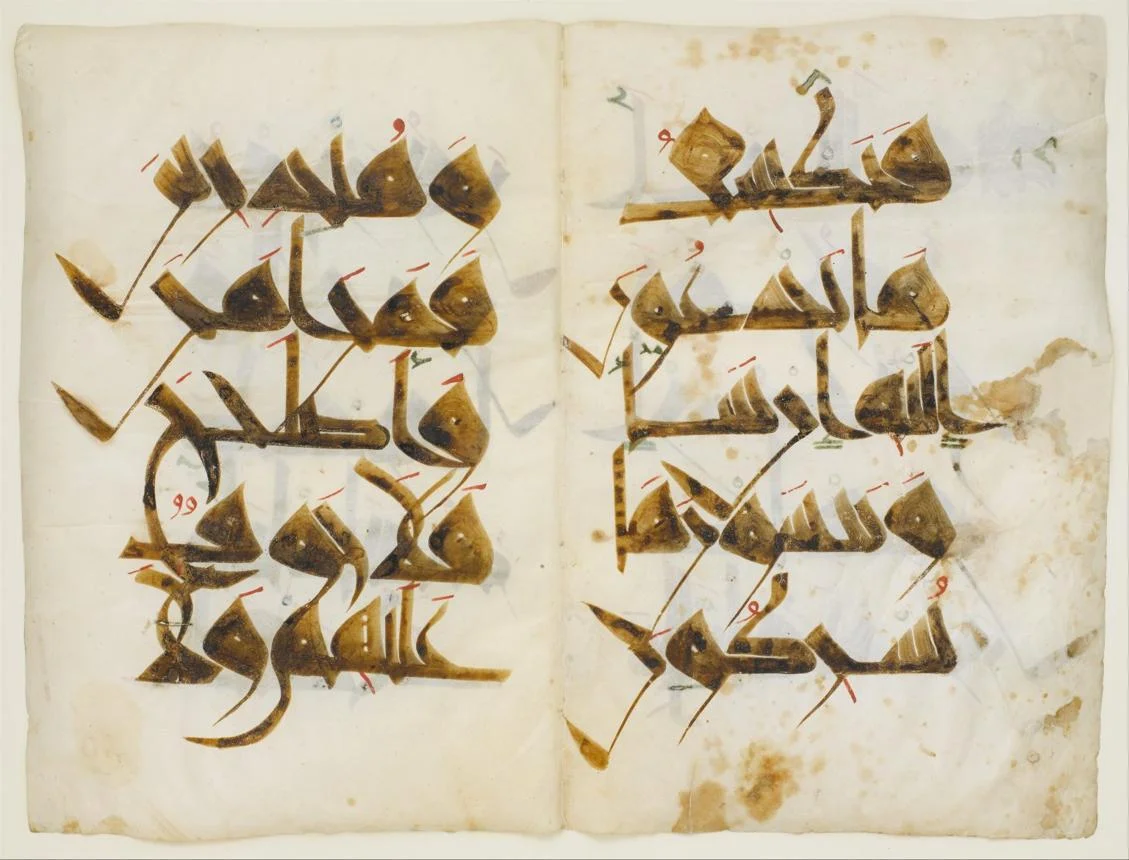
Alongside its storied residential towers and historic marketplaces, Old Sana’a shelters a profound written heritage that illuminates its distinguished intellectual, theological, and cultural legacy. Historic manuscripts are far more than aged leaves of paper; they are indispensable primary sources for tracing the evolution of scholarship, Arabic linguistics, Islamic jurisprudence (fiqh), scribal arts, and calligraphy in Yemen.
The Great Mosque of Sana’a (al-Jami' al-Kabir) stands as one of the most prominent repositories in this manuscript tradition. The discovery within its roof cavities of an extensive cache of early parchment leaves and monumental Qur’anic fragments has provided groundbreaking material for studying the history of the written transmission of the Qur’an, codicology, and early book production. UNESCO archival records and specialized conservation reports have consistently emphasized the urgency of conserving and cataloging these collections as an integral part of the city’s world heritage.
Ancient folios require exacting preventive care: ambient humidity, temperature fluctuations, inadequate storage conditions, and non-specialist handling pose severe risks of irreversible structural decay and loss of textual content.
Digital imaging, detailed codicological cataloging, and systematic recording of dating, provenance, and physical condition are critical steps. They ensure the preservation of intellectual content and provide open access to international scholarship without exposing delicate originals to physical wear.
Safeguarding Old Sana’a’s manuscripts preserves centuries of cumulative written scholarship, bearing witness to the city’s historic prominence as an enduring beacon of learning and culture.
Every manuscript protected today holds knowledge that would be irreplaceable if lost tomorrow.