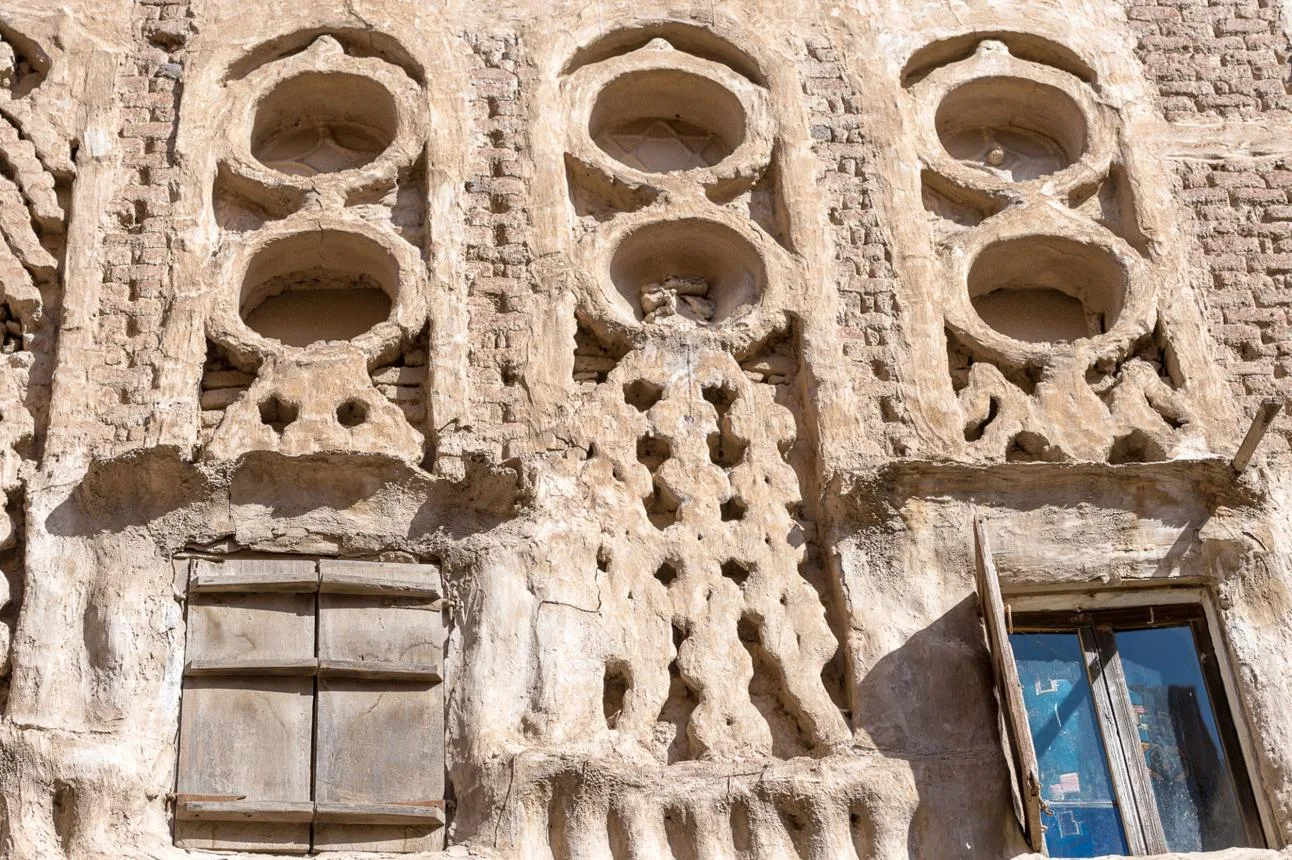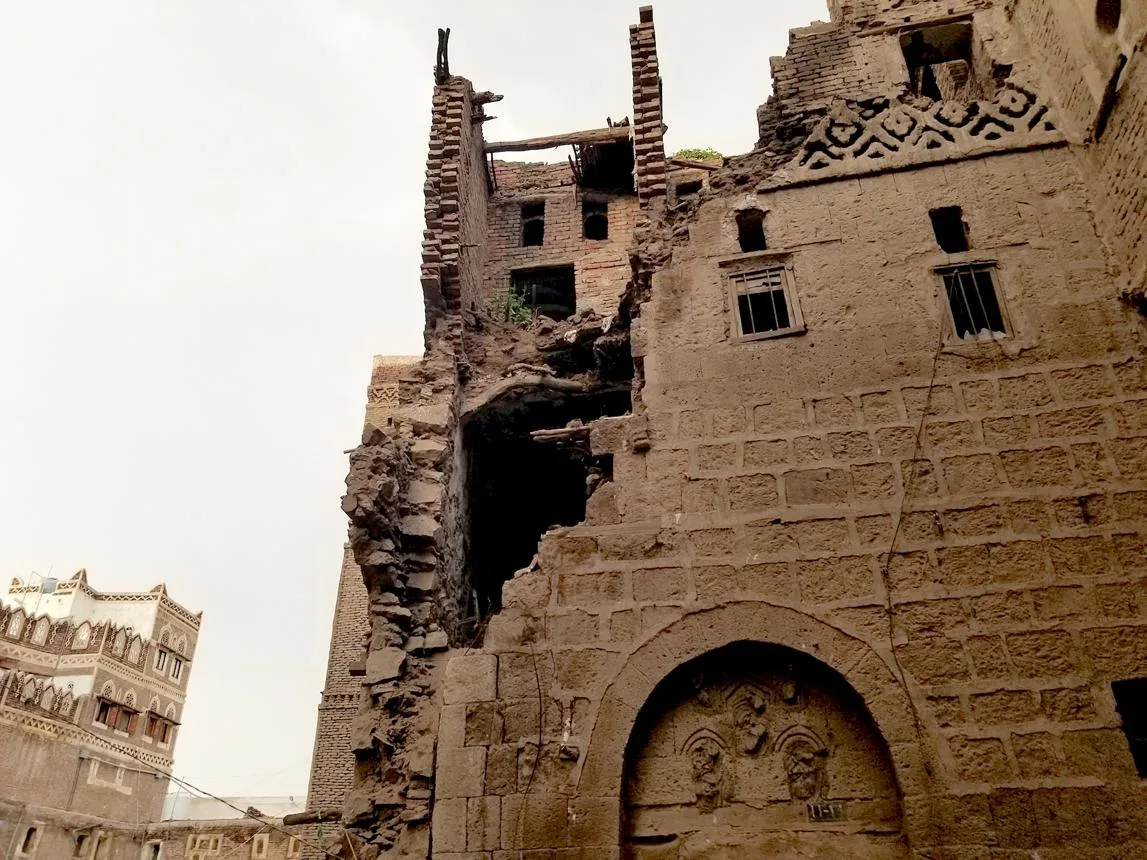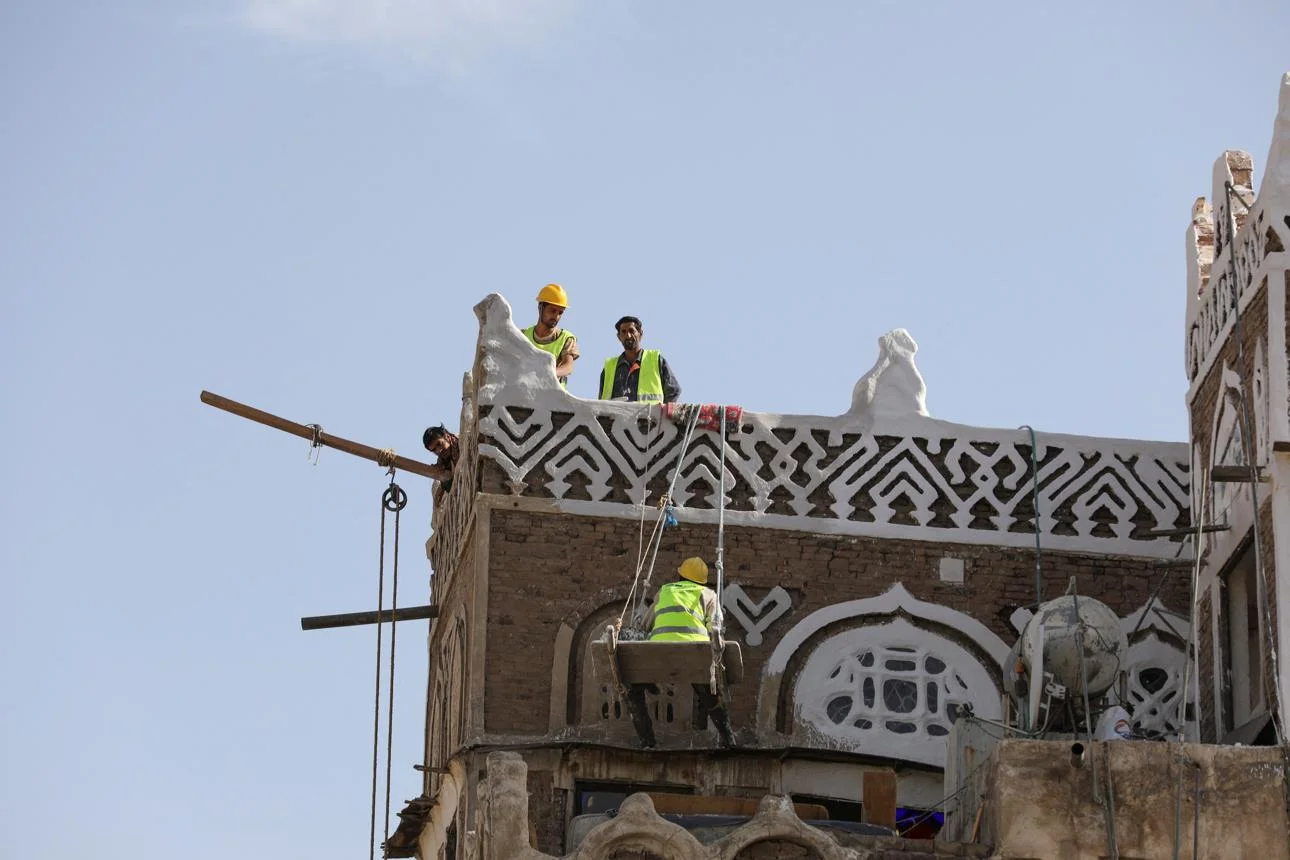
Despite the outstanding cultural significance of Old Sana’a, its historic fabric faces complex, compounding challenges that jeopardize the physical survival of its architectural features. Specialized heritage reports have documented the adverse impacts of intense rainfall, deteriorating public drainage networks, deferred structural maintenance, rapid urban pressures, and broad socioeconomic shifts across the historic city.
When evaluating Dar al-Dhahab and comparable historic tower-houses, several key threats demand close technical attention:
-
Climatic Factors and Moisture Ingress
Heavy rainfall, seasonal flash flooding, ambient humidity, and water seepage through degraded roof terraces and parapet gutters severely attack traditional construction materials. Left unmitigated, persistent water infiltration leads to the leaching of clay mortars, structural cracking, masonry spalling, and compromised load-bearing capacities in vernacular earth and burnt-brick walls.
-
Deferred Maintenance and Restoration Backlogs
Historic tower-houses depend on cyclical, specialized maintenance compatible with their breathable, traditional building fabrics. Neglecting minor defects—such as small terrace fissures or localized drainage blockages—inevitably leads to compound structural failures, escalating minor repairs into costly, complex engineering interventions.
-
Inappropriate Materials and Restoration Techniques
One of the most destructive threats to historic buildings is repairing traditional fabric with modern, non-breathable materials, most notably Portland cement mortars and impervious synthetic paints. Preserving cosmetic appearance is insufficient; interventions must ensure physical and chemical compatibility with lime, gypsum, and earth. Work should always be guided by conservation professionals experienced in traditional masonry.
-
Modifications That Erode Architectural Identity
Installing discordant modern fixtures, replacing timber and gypsum windows with aluminum systems, or rendering over original burnt-brick relief patterns degrades both the visual authenticity and historical integrity of the structure. When repeated across adjoining buildings, such ad-hoc modifications gradually dismantle the visual harmony of entire historic quarters (harat).
-
Socioeconomic Burdens
Maintaining multi-story traditional dwellings requires substantial capital and specialized labor. Many homeowners and heirs find it difficult to bear high conservation costs or to balance modern domestic amenities with rigid historical preservation standards. Effective heritage management requires pragmatic support mechanisms, financial incentives, and community-centered assistance rather than unenforced prohibitions.
-
Deficits in Documentation and Archival Records
The scarcity of historic photographs, measured architectural drawings, ownership deeds, and structural modification records complicates accurate conservation planning. Without rigorous baseline data, differentiating original architectural fabric from later additions becomes exceedingly difficult. Scientific documentation is therefore an indispensable prerequisite for any sound physical intervention.
These factors represent the broader systemic risks common to historic buildings across Old Sana’a. Determining the precise structural condition of Dar al-Dhahab itself requires a dedicated, on-site technical inspection and physical assessment.